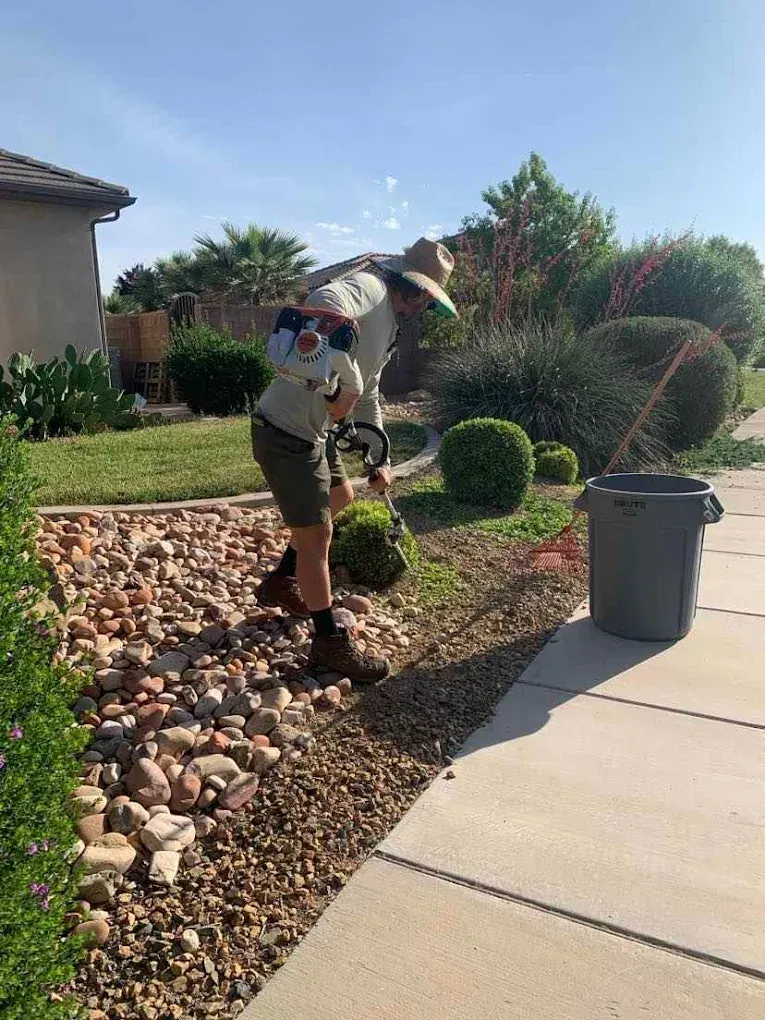
Spring in Washington County starts in February, which catches out anyone who moved here from a real winter. Here is the order the work actually goes in.
Spring here starts in February. If you moved to Washington County from somewhere with a real winter, that is the single most useful thing to recalibrate. By the time it feels like spring cleanup season, you have already missed two of the jobs that matter most.
Here is the order the work actually goes in.
February. The month most people miss
Assess frost damage, but do not cut yet
Walk the property and find what the winter took. Resist cutting immediately: dieback often extends further back than it looks, and cutting too early exposes live tissue to a frost that has not finished. Scratch a stem with a thumbnail. Green underneath means alive, brown means dead. Mark it and come back.
Pre-emergent weed control. This is the deadline
February and March are the pre-emergent window for annual weeds. Miss it and you are hand-pulling and spot-spraying until June, because pre-emergent does nothing once a weed has germinated. It is a barrier, not a cure.
This is the job people most reliably get to too late, and the one with the biggest difference between doing it and not. If you only do one thing on this list in February, do this.
Structural pruning
Late winter, while plants are dormant but close to bud break, is the right window for most trees and summer-flowering shrubs in St George and Washington City. Higher towns run later. Hurricane late February into March, La Verkin in March.
Do not prune spring-flowering shrubs now. You will cut off this year's flowers. Full breakdown in the pruning timing article.
First fertilisation (cool-season lawns)
USU's St George calendar puts cool-season grass fertilisation in February, March, October and November. Roughly one pound of actual nitrogen per application. Warm-season grasses are fertilised later, in April, May and August, because they are still dormant now.
March
Irrigation startup and audit
The most valuable hour you will spend on your yard all year. Turn the system on and watch every zone run. You are looking for:
- Heads cracked by winter or by a mower
- Nozzles blocked or misdirected onto hardscape
- Zones that do not come on at all
- Misting, which means pressure is too high and most of the water is evaporating
- The dry corner every system has
Find these now, in March, when a failure costs you nothing. Find them in July and it costs you the plants. Set the controller to the March-April rate of up to three days a week, and set up cycle-and-soak while you are in there.
Aeration (cool-season lawns)
March and September for cool-season grass; April and September for warm-season. Our compacted clay makes this worth more here than in most climates. It is a direct improvement to water infiltration, which is the limiting factor on almost every lawn in this county.
Cut back frost damage
By now the risk has passed at lower elevation and you can see clearly what is alive. Cut dead material back to live tissue. Ornamental grasses get cut hard. Close to the ground. Before new growth starts, or you will be trimming around it all season.
Bed cleanup and mulch
Clear winter debris, re-edge where gravel or rock has crept onto paths, and top up mulch or decorative rock where it has thinned. Bare soil in a bed is a weed nursery, and it will not pass a rebate inspection either if you are in a conversion program.
April
Warm-season lawn work
Bermuda and other warm-season grasses wake up now. April and May are their seeding window and the start of their fertilisation schedule. Aeration for warm-season lawns lands in April.
Planting
Spring planting works here, though autumn is generally kinder. It gives roots a full cool season to establish before the first summer. If you are planting now, the establishment watering matters more than anything you do on planting day. And check the ground: if your auger stops at eighteen inches on something white and cemented, that is caliche, and you need to deal with it before planting, not after.
Raise the mower
Set to 2.5 to 3 inches minimum and leave it there through summer. Never remove more than a third of the blade at once. This is free and it is one of the more effective things you can do to get a cool-season lawn through July.
Broadleaf weed control
May and June are the main broadleaf window, with a second pass in October and November. Different job from February's pre-emergent, different timing, both worth doing.
Order of operations, condensed
| When | Job | Miss it and… |
|---|---|---|
| Feb | Pre-emergent | You hand-weed until June |
| Feb-Mar | Structural pruning | Wait a year, or prune badly in summer |
| Feb-Mar | Cool-season fertilisation | Weaker lawn going into summer stress |
| Mar | Irrigation audit | You find the faults in July, expensively |
| Mar | Aeration (cool-season) | Water keeps running off instead of in |
| Mar | Cut back frost damage | Dieback spreads, new growth fights dead wood |
| Apr | Aeration + feed (warm-season) | Slow green-up, thin summer coverage |
| Apr | Mower height up | Shallow roots, worse July |
Elevation adjustment
Everything above is calibrated to St George and Washington City. Add one to two weeks for Ivins and Hurricane, and two to three for La Verkin, which sits at 3,816 feet in a colder hardiness zone than the rest of the county. Pruning and frost-damage cleanup are the two jobs where being early hurts.
If you would rather not track all of this, spring cleanup is a service we run across Washington County on a schedule. The point of booking it early is that we get to you while the February jobs are still February jobs.
Fertilisation, aeration, mowing height and weed-control timings are from USU Extension's St George turfgrass management calendar. Irrigation guidance is from the Washington County Water Conservancy District.